Collecting Spanish Cobs in the Philippines

SPANISH COLONIAL COBS COINAGE
Home / Philippine Numismatics Collectors Hub / Currency Collecting / Collecting Spanish Cobs in the Philippines

This guide focuses on the key collecting aspects of Spanish cobs, including specifications, design features, physical characteristics, attribution clues, and authentication considerations based on the available reference material.
For a broader historical overview of this series, visit its related history page in the Philippine Currency Timeline.
Quick Reference
Coin Type: Cob
Minting Period: 1572–1773
Primary Metal: Silver (reales) and gold (escudos)
Common Denominations: ½ Real, 1 Real, 2 Reales, 4 Reales, 8 Reales
Major Mints: Mexico City, Lima, Potosí
Purity: 91% (reales) and 90% (escudos)
Identification Features
Obverse
Crowned Habsburg shield
Name of the reigning king
Legend with DEI GRATIA
Mint mark and assayer initial may appear with the shield
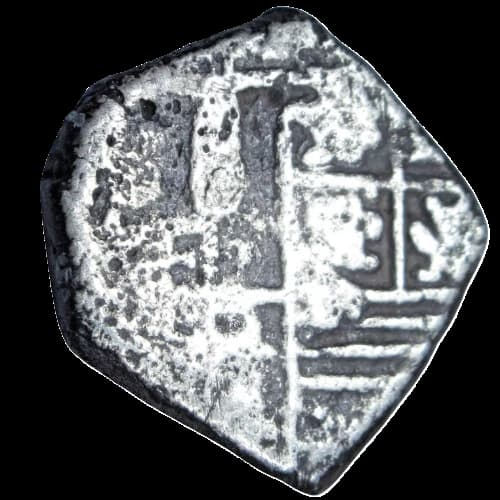
Reverse
Arms of Castile and León
Intersecting lines emphasized to form a cross
Legend in the form of REX HISPANIARUM ET INDIARUM
Later issues may show the Pillars of Hercules motif

Mint Identification Note:
Mexican mints are known to mint coins with pointed fleur-de-lis surrounding the cross.
Denominations and Standard Weights
Denomination | Standard Weight |
8 reales | 27.47 grams |
4 reales | 13.73 grams |
2 reales | 6.87 grams |
1 real | 3.43 grams |
½ real | 1.72 grams |
Escudo Denomination | Standard Weight |
8 escudos | 27.06 grams |
4 escudos | 13.53 grams |
2 escudos | 6.77 grams |
1 escudo | 3.34 grams |
No equivalent | ½ real only |
Attribution Notes
Dating and locating a cob can be difficult.
Mint marks and assayers’ initials are important attribution clues.
If an assayer’s initials are present and the mint is known, dating parameters may be narrowed.
Differences in mint marks and assayer initials are notable collectible features.
One of the challenges in identifying cob coins is their crude appearance and irregular shapes, often further affected by clipping, which can obscure key design elements.
Royal Cobs
Royals stand apart from regular cobs due to better quality.
They are round, more carefully struck, and better centered than standard cobs.
They are described as presentation pieces or proofs of minting quality rather than regular circulation coins.
Authentication Notes
Attribution can be difficult because of irregular shape, uneven strikes, and incomplete details.
Mint marks, assayer initials, and visible design elements are the main diagnostic clues.
Monetary reforms incorporated dates, mint marks, denominations, and assayer initials to establish more regulated minting practices.
Market Note:
Given the extensive circulation and historical importance of Spanish cob coinage, replicas can be found in the market. Collectors are advised to proceed with caution, particularly when listings do not clearly state this and the goal is to obtain an original piece. These replicas may or may not be made of silver, and they often lack the natural characteristics typically seen in genuine examples.
References & Sources:
Bangko Sentral ng Pilipinas – "History of Philippine Money."
Ocampo, Ambeth R. "Yaman: History and Heritage in Philippine Money." Manila: Bangko Sentral ng Pilipinas, 2020.
University of Notre Dame. "Spanish Coinage Circulating in the Colonies"
Blanton, Herman. "Macuquina"
Christopher, Walker. "The Spanish Cob Pieces of Eight"
Sedwick Daniel Frank. "Royals a Cob by Any Other Name"
Selected numismatic articles, auction archives, and collector references used for comparative study.
Continue Your Philippine Numismatics Journey


Comments