Collecting Spanish Milled Coins in the Philippines

Updated: Jun 28
SPANISH COLONIAL MILLED COINAGE
Home / Philippine Numismatics Collectors Hub / Currency Collecting / Collecting Spanish Milled Coins in the Philippines

Spanish milled coins reached the Philippines through the Manila–Acapulco Galleon Trade, where it became a widely circulated medium of exchange in both local and regional commerce.
Within this broader historical context, collectors primarily encounter these coins through their technical distinctions—ranging from type and design variations to mint marks, assayers’ initials, metal purity,
and overall fabric—each reflecting the standardized yet evolving nature of Spanish colonial minting practices. For a broader historical overview of this series, visit its related history page in the Philippine Currency Timeline.
Quick Reference
Coin Type: Milled
Minting Period: 1732–1825
Primary Metal: Silver (reales) and gold (escudos)
Common Denominations: ½, 1, 2, 4, and 8 Reales
Major Mints: Mexico City, Lima, Potosí, and other Spanish colonial mints
Silver Purity: 91% (Pillar type) and 90% (Bust type)
General Identification Features
Machine-struck coins produced using blank planchets
Uniform thickness, size, weight, and more even edges than cobs
Fuller and more regular strike details
Mint marks and assayers’ initials on the coin
Common motifs include the coat of arms of Castile and León, Pillars of Hercules, “PLUS ULTRA,” and royal legends
Overlapping Coinage Types
Due to the vast distance between Spain and its overseas colonies, news of a monarch's death often took months or even years to arrive. As a result, colonial mints sometimes continued striking coins bearing the name or portrait of the previous ruler while preparations for the new coinage were underway. This occasionally resulted in coins of the same date being issued under different monarchs or design types. A well-known example is the 1747 8 reales, which can be found with issues associated with both the late reign of Philip V and the early reign of Ferdinand VI.
Collector's Note: The transition was not instantaneous and depended on when official decrees, dies, and authorization reached each mint.
Main Design Types
Pillar Type / Globe Type
Obverse
Crowned arms of Castile and León
Assayer’s initial to the left of the shield; denomination to the right
Legend: Monarch’s name and title, such as “PHILIP V D. G. HISPAN. ET IND. REX”

1761 Modification:
In 1761, a minor but important modification was introduced to the design of Spanish colonial pillar coinage. On earlier issues, the cross above the royal crown was positioned between the letters I and S of the inscription HISPAN. For reference see MEXICO. 8 Reales, 1760-MM. PCGS
Beginning in 1761, the cross was shifted slightly to the left, placing it between the letters H and I. For reference see MEXICO. 8 Reales, 1761-MM. PCGS
Reverse
Central Design: Two conjoined globes representing the Old and New Worlds
Upper Design: Crown above the globes
Flanking Design: Two crowned pillars representing the Pillars of Hercules
Motto: “PLUS ULTRA”
Legend: “VTRAQUE VNUM”
Date and Mintmark: Date below; mintmark displayed before and after the date

1754 Modification:
Beginning in 1754, the crown above the left pillar was replaced with the imperial crown.
The right pillar continued to bear the Spanish crown design.

Bust / Portrait Type
Obverse
Weight: Unchanged from the earlier reform
Bust of the ruling monarch
Legend: Monarch’s name and title, such as “CAROLUS III DEI GRATIA,” with the date

Transition from Charles III to Charles IV (1789–1791)
Following the death of Charles III in 1788, Spanish mints continued to use his portrait on colonial coinage due to the time required to prepare and distribute new dies and official portrait models for his successor, Charles IV. During this transitional period, the obverse legend was changed from CAROLUS III to CAROLUS IIII, reflecting the regnal number of the new monarch while retaining the portrait of his predecessor. On some issues, the numeral IIII was later rendered as IV.
By 1791, once official portrait models became available throughout the empire, the mints began producing coins bearing the like
Ferdinand VII Bust Types
Coins of Ferdinand VII feature two principal portrait styles: the armored bust and the draped bust. The earlier issues portray the king in military attire, while later coinage adopts a more classical civilian portrait.
Reverse
Central Design: Crowned shield of Castile and León replacing the globe-and-water design
Flanking Design: Pillars of Hercules with banners
Motto: “PLUS ULTRA”
Crowns Above Pillars: Absent
Legend: “HISPAN. ET IND. REX”

Legend Variations and Space Limitations:
Smaller denominations of Spanish milled coinage often display abbreviated legends due to limited space, particularly in the earlier pillar type series. In some cases, half real coins may use simplified or symbolic denomination markings, and assayer initials may be reduced or less clearly defined. These variations are less pronounced in the later bust type coins, where designs became more standardized.
Design Elements to Check
Coat of arms of Castile and León
Royal legend identifying the monarch and title
“PLUS ULTRA”
Pillars of Hercules
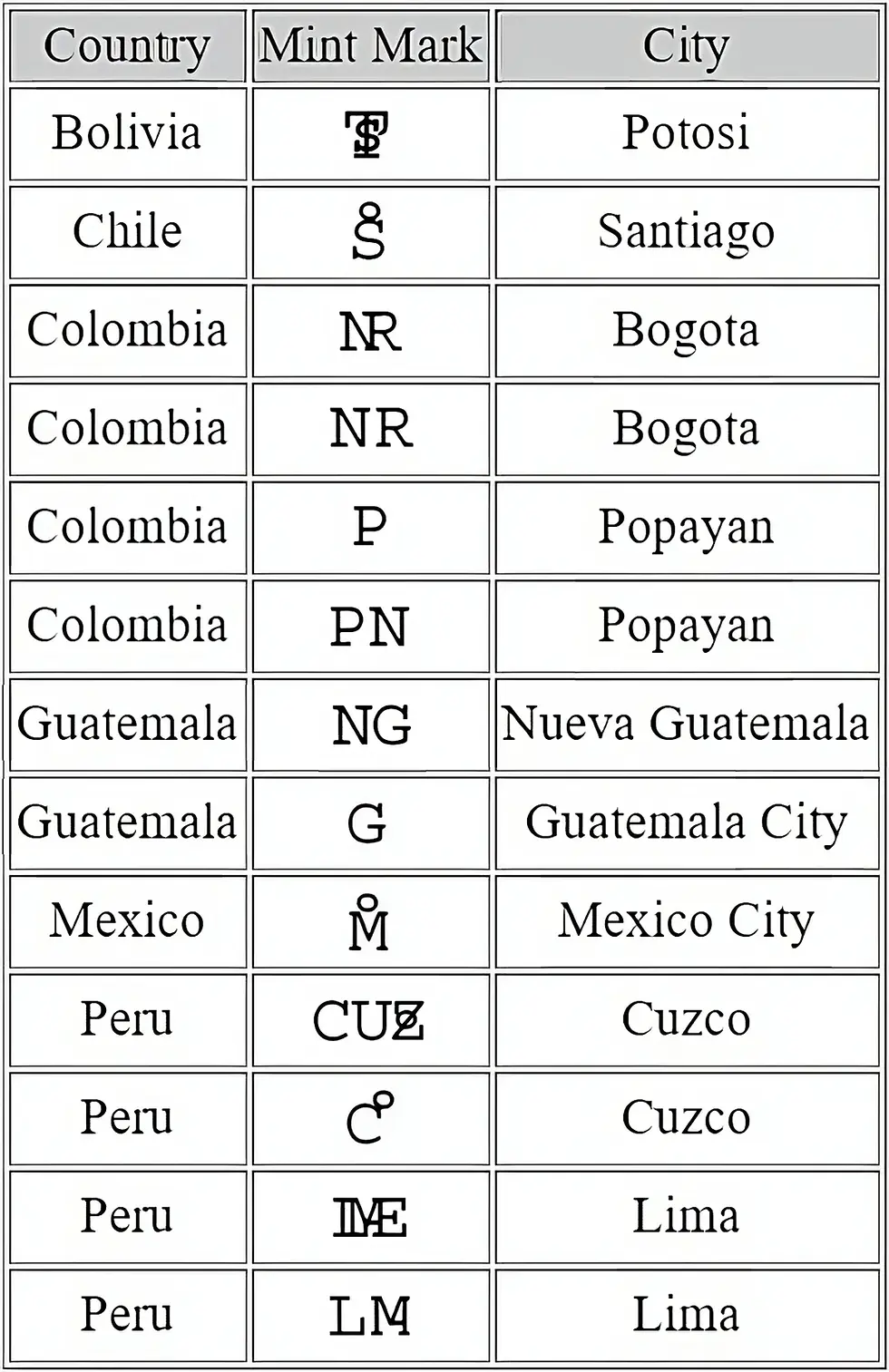
Mint marks
Assayers’ initials
For pillar types: conjoined globes and “VTRAQUE VNUM”
For bust types: portrait obverse and shield reverse
Authentication Notes
Milled coins were struck with full details and uniform edges, making them harder to clip or counterfeit than cobs.
Production was supervised by two assayers, and both added their initials to each coin as part of quality control.
Mint mark varieties and assayer variations are notable collectible features within the series.
References & Sources:
Bangko Sentral ng Pilipinas – "History of Philippine Money."
Ocampo, Ambeth R. "Yaman: History and Heritage in Philippine Money." Manila: Bangko Sentral ng Pilipinas, 2020.
University of Notre Dame. "Spanish Coinage Circulating in the Colonies"
Larreal, Hussein. "How the 8 Reales Became a World Currency." CoinsWeekly.
Utberg, Neil S. "The Coins of Colonial Mexico, 1536–1821, and the Empire of Iturbide, 1821–1823", 1966.
Selected numismatic articles, auction archives, and collector references used for comparative study.
Continue Your Philippine Numismatics Journey


Comments