Collecting Spanish-Philippine Decimal Coins

Updated: May 20
SPANISH COLONIAL DECIMAL COINAGE
Home / Philippine Numismatics Collectors Hub / Currency Collecting / Collecting Spanish-Philippine Decimal Coins
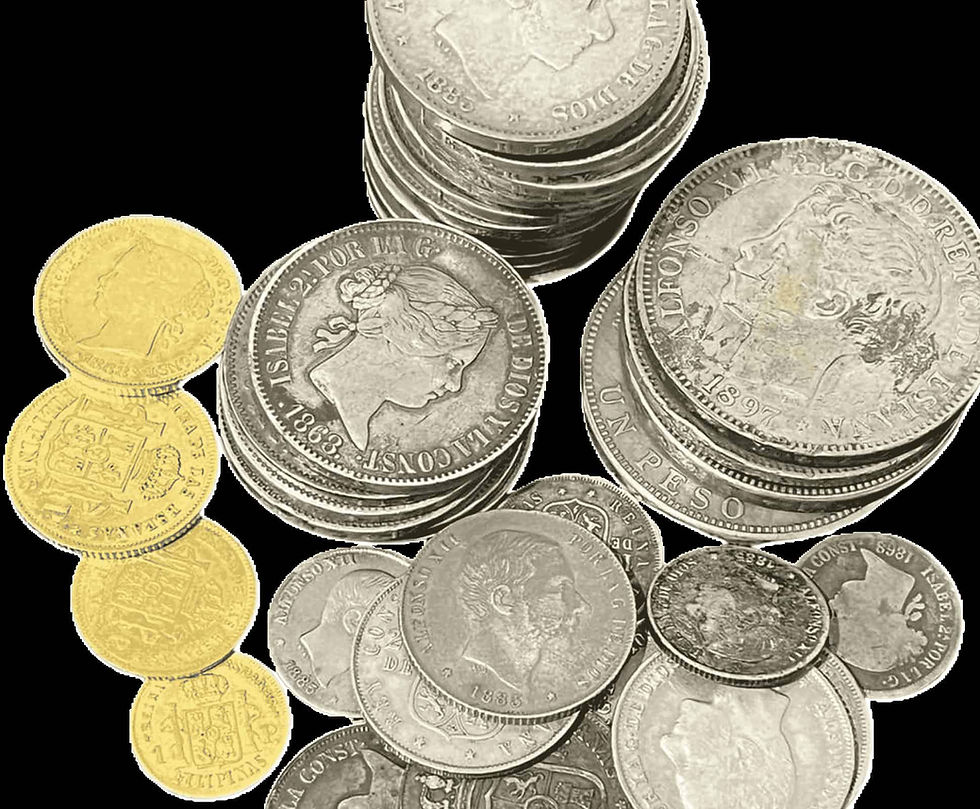
This guide focuses on specifications, series structure, identification features, rarity observations, varieties, collecting approaches, and authentication guidance for Spanish-Philippine coinage.
For a broader historical overview on Spanish-Philippine coins, visit its related history page in the Philippine Currency Timeline.
Quick Reference
Coin System: Decimal
Minting Period: 1861–1898
Primary Metals: Gold, silver, and copper
Main Mint: Casa de Moneda de Manila
Key Monarchs: Isabella II, Alfonso XII, Alfonso XIII
Spanish-Philippine Decimal Coins Major Series and Denominations
Series | Dates | Denominations |
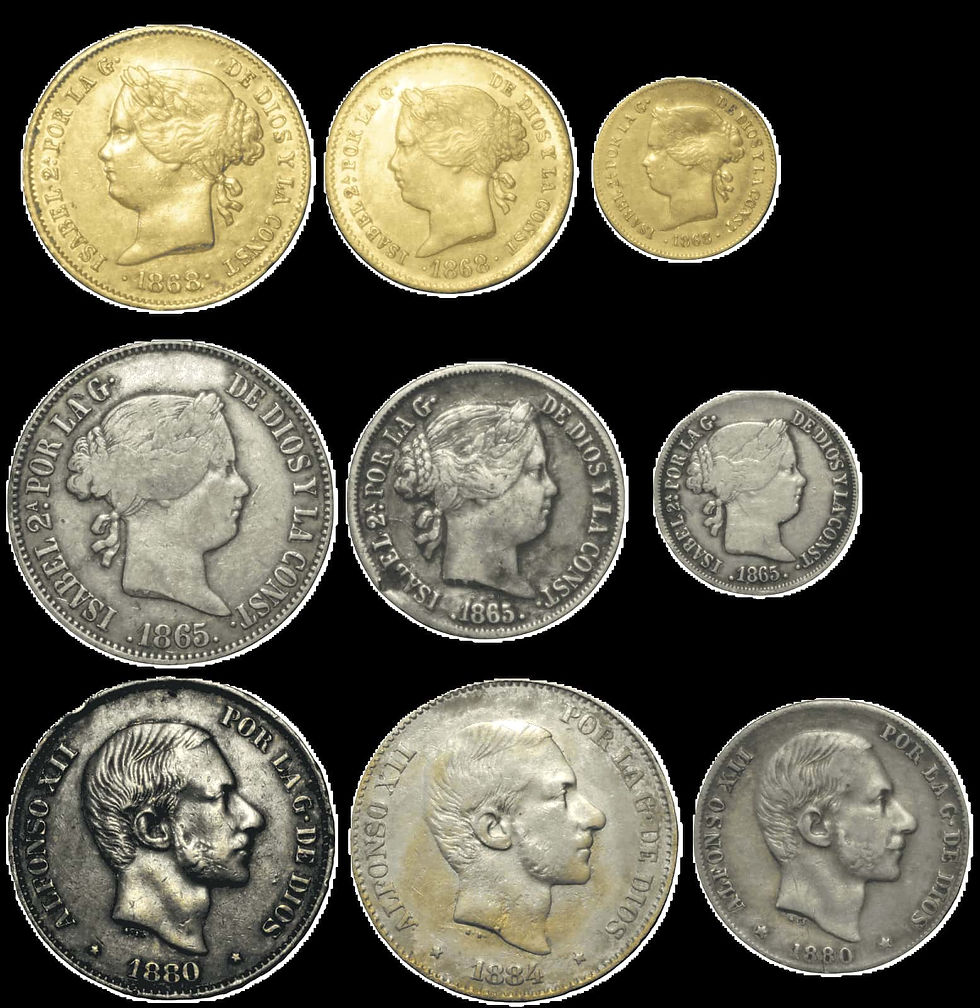
Queen Isabella II | 1861–1868 | Silver: 10 Céntimos, 20 Céntimos, 50 Céntimos Gold: 1 Peso, 2 Pesos, 4 Pesos |
Alfonso XII | 1880–1885 | Silver: 10 Céntimos, 20 Céntimos, 50 Céntimos Gold: 4 Pesos |
Alfonso XIII | 1897 | Silver: 1 Peso Copper: 1 Centimo, 2 Centimos |
Alfonso XIII Copper Coins:
Copper issues are generally recognized as pattern pieces, with no confirmed evidence of regular circulation.

Identification Features
Portrait of the reigning Spanish monarch
Spanish coat of arms / crowned Spanish shield
Pillars of Hercules motif
“FILIPINAS” inscription on the gold issues and the 1897 One Peso
Changed portrait and legend across the major portrait series
Frozen Dates:
Frequent political upheavals and economic challenges often disrupted coin production, resulting in the phenomenon of "frozen dates"—coins minted in later years but bearing earlier dates, such as 1868 and 1885.
Rarity and Availability
Spanish-Philippine coins were produced in relatively modest quantities, but many survive today in circulated condition.
Factors Affecting Rarity
Heavy circulation during the late nineteenth century
Melting of silver and gold coins
Limited survival of high-grade examples
General Rarity Observations
Availability | Examples |
Commonly encountered | 1868 and 1885 issues of 10 Céntimos, 20 Céntimos, and 50 Céntimos |
Moderately scarce | Higher-grade examples of Isabella II and Alfonso XII silver coinage; the 1897 One Peso; selected dates across the 10, 20, and 50 Céntimos series; and selected gold issues of Isabella II |
Scarce to rare | Gold denominations overall; certain low-mintage issues; well-preserved uncirculated examples; the 1864 Isabella II silver issues; and selected scarcer dates within the Alfonso XII silver series |
Known Die Varieties and Collectible Features
In addition to date and denomination collecting, the series can be studied through die varieties and striking characteristics connected with the minting process.
Repunched Dates
Repunched dates occur when a digit in the date is punched into the die more than once. These may appear doubled or misaligned and are treated as collectible evidence of die preparation.
Overdate Varieties
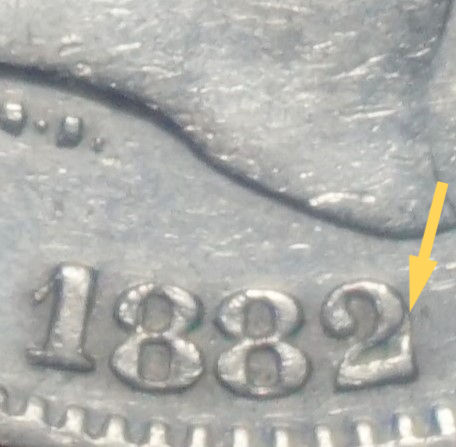
An overdate occurs when a new date is punched over an existing date on the die. These varieties may be subtle and can require magnification for study.
Why Overdates Occur:
A die prepared for one year is modified for use in the following year
A mistake in the date punch is corrected with a new digit
The mint conserves materials by reusing dies rather than engraving new ones
How Overdates Are Notated:
Overdates are typically written as “new date / underlying date,” such as 1882/0, indicating that the final digit was struck over an earlier numeral.
Known Overdate Varieties:
Series | Examples |
Queen Isabella II | 1861/0 1 Peso, 1861/0 2 Peso, 1862/0 4 Peso, 1862/1 1 Peso, 1862/1 2 Peso, 1862/1 4 Peso, 1863/2 1 Peso, 1863/0 2 Peso, 1863/2 2 Peso, 1863/50 4 Peso, 1864/0 1 Peso, 1864/0 2 Peso, 1864/3 2 Peso, 1864/3 4 Peso, 1865/3 1 Peso, 1865/55 20C, 1866/5 20C, 1866/65 4 Peso, 1866/4 10C, 1867/6 10C, 1868/58 50C, 1868/58 50C PL, 1868/7 50C, 1868/7 1 Peso, 1868/6 2 Peso, 1868/58 4 Peso, 1868/65 |
Alfonso XII | 1881/0 10C, 1881/0 20C, 1882/1 10C, 1882/1 20C, 1882/1 50C, 1882/0 50C, 1883/1 10C, 1883/2 10C, 1883 20C Horizontal "8", 1883/2 20C, 1885/3 10C, 1885/3 50C |
Die Cracks and Die Breaks
Die cracks occur when the steel die develops fractures through repeated use and appear on coins as raised lines. Larger failures may develop into die breaks. These are recognized as collectible minting varieties, often of interest to specialized collectors.


Rotated Dies
A rotated die error happens when the coin is struck with one side turned at the wrong angle, causing the front and back designs to be misaligned.

Why Varieties Matter
Die varieties and striking characteristics can expand collecting beyond dates and types to include minting variations and errors.
Collecting Strategies
Collecting Strategy | Examples |
Type Set | Isabella II silver coin Alfonso XII silver coin Alfonso XIII 1897 Peso |
Monarch Series | Isabella II series Alfonso XII series |
Denomination Collection | Example: 10 Céntimos across multiple series |
Die Varieties | Overdates, repunched dates, die cracks, die breaks, and rotated die errors |
Collector Practices:
Study denominations, minting years, and common design types before buying
Buy the best condition you can afford
Examine dates carefully using magnification when studying varieties
Compare coins with verified examples in auction archives
Consult specialized references and grading service databases
Authentication Notes
Purchase from reputable dealers
Use trusted auction houses
Prefer coins certified by recognized grading services
Authentication is especially important for gold denominations
Known replicas of the 1897 issues exist in the market, and collectors should exercise caution when evaluating these coins.
Verify authenticity through reputable sources, and be cautious of examples that appear unusually well-preserved or lack clear provenance.
References & Sources:
Continue Your Philippine Numismatics Journey


Comments