The Philippine 10 Centavos Coin

Updated: May 21
ENDURING DENOMINATION
Home / Philippine Numismatics Collectors Hub / Currency Studies / The Philippine 10 Centavos Coin

The 10 centavos coin is one of the most enduring denominations in Philippine numismatic history. Introduced during the Spanish colonial period, it remained part of Philippine coinage for more than a century and a half, circulating across multiple political eras before gradually fading from everyday use in recent decades.
Throughout its long history, the 10 centavos coin evolved alongside the country’s political and economic transformations. From its early silver composition to later base-metal designs, the coin reflects the broader development of Philippine currency.
The Philippine peso is divided into 100 centavos, making the 10 centavos coin equal to one-tenth of a peso.
Spanish Era: The Birth of the 10 Centavos
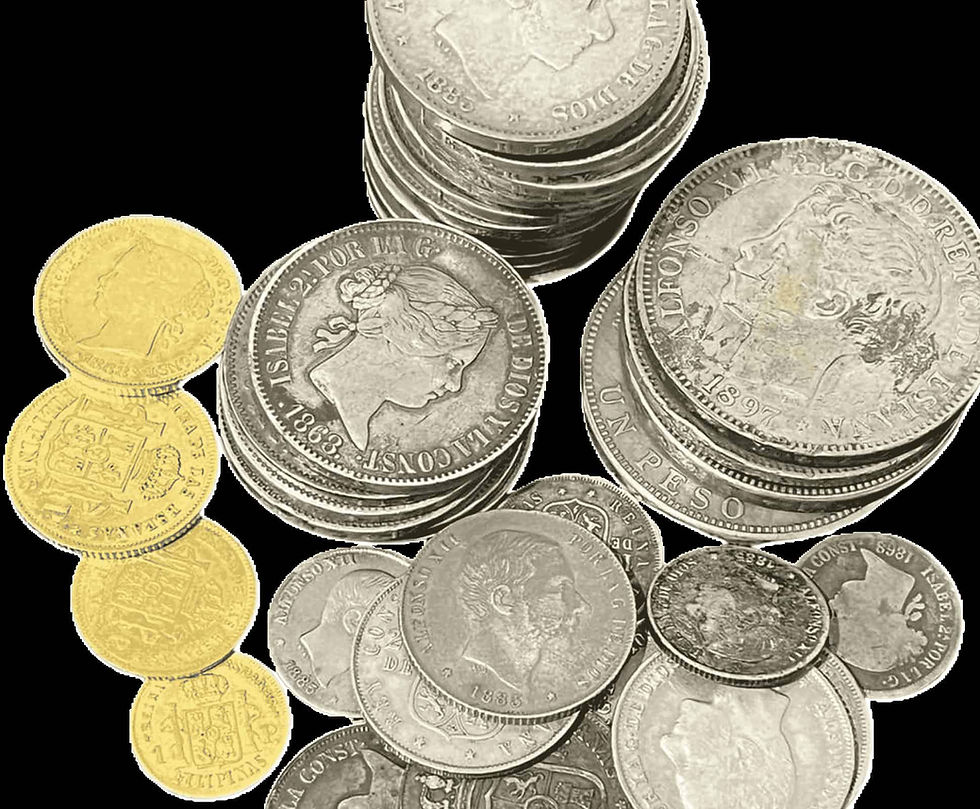
The first Philippine 10 centavos coins were introduced during the Spanish colonial period following the establishment of the Manila Mint, formally known as the Casa de la Moneda de Manila.
Silver fractional coins began to be minted in the Philippines in the 1860s as part of Spain’s effort to standardize the colony’s monetary system. Among these denominations was the 10 centavos coin, first struck in 1864 and used as an important fractional currency for everyday transactions.
These early coins were made of silver and followed the Spanish decimal monetary system that linked Philippine coinage to the peso.


The American Period and the Silver 10 Centavos
After Spain ceded the Philippines to the United States in 1898, the American administration introduced a new coinage system through the Philippine Coinage Act of 1903.
The 10 centavos coin continued to be issued under this new system. Early issues were struck in .900 fine silver, weighing about 2.69 grams, making them comparable in silver content to contemporary American silver dimes.
The design featured a Filipino figure standing beside an anvil with Mount Mayon in the background, symbolizing industry and progress in the Philippines. On the reverse side, the coin displayed an eagle above a shield, representing the authority of the United States.
Later issues reduced the silver content to .750 silver, reflecting adjustments in monetary policy and metal prices.
These coins circulated widely during the American and Commonwealth periods and remain popular among collectors today.


Post-War Republic Coin Series
Following Philippine independence in 1946, the nation gradually moved away from silver coinage and toward base-metal coins. Over the decades, the 10 centavos coin appeared in several modern Philippine coin series.
English Series (1958–1966)
The English Series marked one of the first major redesigns of Philippine coinage after independence. Although the denomination remained the same, the coin’s composition shifted away from silver toward more economical materials, reflecting global changes in coinage systems.
The design also incorporated national symbols emphasizing the Philippines’ status as an independent republic.

Pilipino Series (1967–1974)
In 1967, the Philippines introduced a new coin series honoring important figures in Filipino history. The 10 centavos coin featured Francisco Balagtas, one of the country’s most celebrated literary figures and the author of Florante at Laura.
His portrait would remain associated with the denomination for decades.

Ang Bagong Lipunan Series (1975–1982)
The Ang Bagong Lipunan (ABL) series retained the portrait of Francisco Balagtas but introduced updated inscriptions reflecting the political themes of the era.
This series continued the transition toward modern coinage materials and designs.

Flora and Fauna Series (1983–1994)
The Flora and Fauna series introduced environmental themes into Philippine coinage. While Balagtas remained on the obverse of the 10 centavos coin, the reverse featured native Philippine wildlife, highlighting the country’s biodiversity.

BSP Coin Series (1995–2017)
The Bangko Sentral ng Pilipinas coin series introduced further redesigns, including the updated BSP seal on the reverse side.

Collecting Philippine 10 Centavos Coins
For collectors, the 10 centavos coin offers a focused view of the evolution of Philippine coinage across multiple eras.
Collectors often focus on specific periods such as:
Spanish-Philippine silver 10 centavos coins
U.S.–Philippine silver issues (1903–1945)
Republic-era coin series
Modern base-metal issues
Because the denomination spans multiple historical periods, it provides a compact way to explore the broader history of Philippine currency.
Conclusion
Few Philippine coins have had as long a life as the 10 centavos denomination. From its silver origins in the Spanish colonial period to its final appearance in modern coin series, the coin witnessed significant changes in the nation’s political, economic, and cultural landscape.
Although the 10 centavos coin is no longer produced, it remains an important part of Philippine numismatic history and a reminder of how everyday currency evolves over time.
References & Sources:
Bangko Sentral ng Pilipinas – "Coins and Notes."
Ocampo, Ambeth R. "Yaman: History and Heritage in Philippine Money." Manila: Bangko Sentral ng Pilipinas, 2020.
Continue Your Philippine Numismatics Journey


Comments