Varieties in Philippine Republic Banknotes: Beyond Denominations

Updated: May 21
BANKNOTE VARIETIES
Home / Philippine Numismatics Collectors Hub / Currency Studies / The First Philippine Commemorative Coins

Many collectors begin exploring Philippine banknotes by focusing on denominations or series. While this approach provides a good starting point, it reveals only part of the story behind Philippine currency.
Within each banknote series, collectors can often find numerous varieties and subtle differences created by changes in printing, signatures, security features, and production methods. These variations add layers of interest and help document the evolution of Philippine currency over time.
For notaphilists—collectors who specialize in banknotes—studying these varieties provides a deeper understanding of how Philippine banknotes were designed, produced, and issued.
What Are Philippine Republic Banknotes Varieties?
A banknote variety refers to a variation within the same denomination or design type. These differences may result from changes in production, updates in design elements, or shifts in the institutions responsible for issuing currency.
Unlike entirely new banknote series, varieties usually appear as minor modifications within an existing design, making them particularly interesting for collectors who focus on detailed study.
Common types of Philippine banknote varieties include differences in:
Printer or printing authority
Signature combinations
Serial number patterns
Official seals and emblems
Commemorative markings
Printing errors
Printer Varieties
Over the decades, Philippine banknotes have been produced by different security printing companies and government printing facilities.
Changes in printers may introduce subtle variations in:
Color tone
Paper texture
Printing sharpness
Placement of certain design elements
Although these differences may appear minor, experienced collectors often learn to identify them when comparing banknotes from different printings.
Printer varieties can also reflect changes in the Philippines’ currency production infrastructure, including the eventual establishment of local printing capabilities.

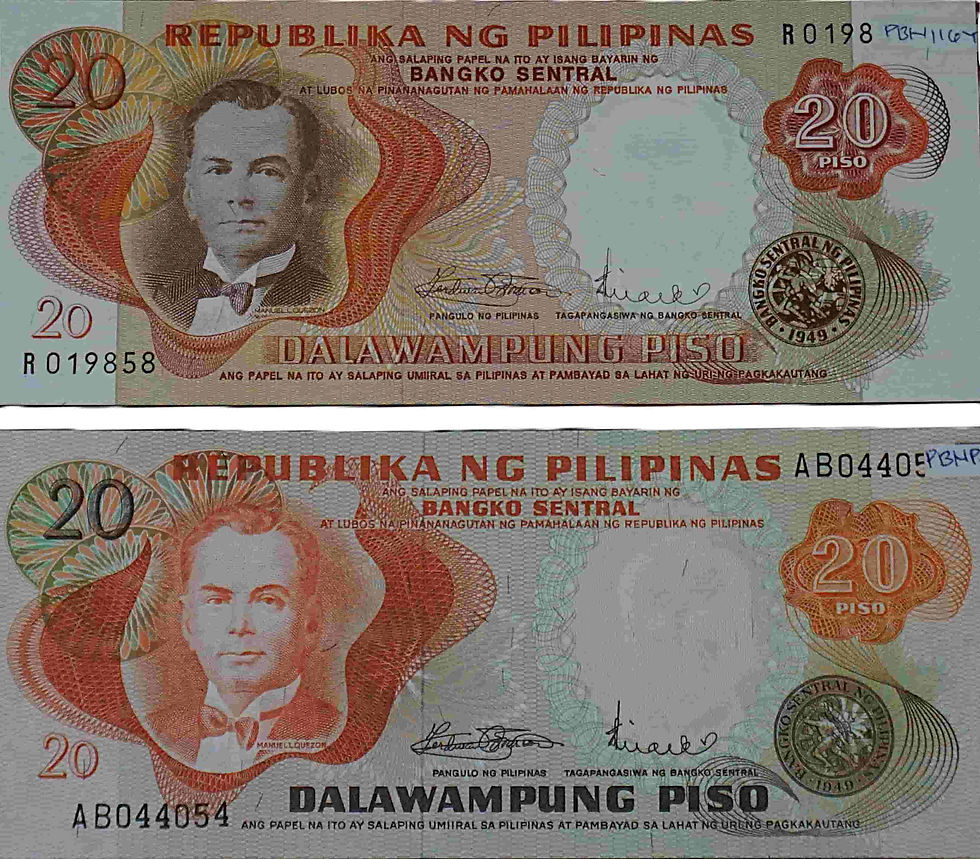
Signature Combinations
One of the most noticeable varieties in Philippine banknotes involves the signatures printed on the note.
Most Philippine banknotes carry the signatures of:
The Central Bank Governor (or BSP Governor)
The Philippine President
Whenever either of these officials changes, the signature combination on newly printed banknotes may also change.
As a result, collectors often encounter the same banknote design with multiple signature varieties, each corresponding to a different administration period.
These differences allow collectors to organize banknotes according to historical periods of monetary leadership.

Serial Number Varieties
Serial numbers can also produce interesting varieties that attract collectors.
Examples include:
Unusual serial number prefixes
Replacement notes used to substitute damaged prints
Very low serial numbers
Repeating or patterned serial numbers
Although many of these notes circulated normally, collectors often preserve examples with distinctive serial numbers due to their novelty or rarity.
Serial number variations are particularly popular among collectors who build specialized sub-collections.


Seal and Design Variations
Changes in official seals or design elements may also create collectible varieties.
For example, updates to the Central Bank of the Philippines seal or the later Bangko Sentral ng Pilipinas emblem can appear across different banknote series.
Other small design modifications may include:
Updated typography
Security enhancements
Subtle adjustments to design layout
These changes often occur when new security technologies are introduced or when the monetary authority updates the visual identity of the banknotes.

Commemorative Banknote Issues
In addition to regular circulation notes, the Philippines has also issued commemorative banknotes celebrating important national events.
These notes often feature:
Special overprints
Additional inscriptions
Modified designs
Commemorative issues are usually produced in smaller quantities and are often preserved by collectors soon after release.
Because of their historical themes, commemorative banknotes connect Philippine currency directly with significant moments in national history.

Error Notes
Printing errors can produce rare and highly collectible varieties.
Examples of banknote errors include:
Misaligned printing
Missing design elements
Inverted serial numbers
Incomplete overprints
Since such mistakes occur during the printing process, they are usually discovered only after the notes enter circulation. When verified as genuine printing errors, these notes can become prized items among collectors.

Specimen Banknotes
Specimen banknotes represent another category of interest for collectors.
These notes are produced for reference and archival purposes, often distributed to financial institutions, museums, or training facilities.
Specimen notes usually include clear markings such as:
The word “SPECIMEN”
Cancellation punches
Unique serial numbering
Although they were never intended for circulation, specimen notes provide insight into the design and security features of Philippine banknotes.

Why Varieties Matter to Collectors
Studying banknote varieties adds depth to the hobby of collecting Philippine currency.
Rather than collecting only one example of each denomination, collectors can explore multiple variations that reflect changes in:
Monetary leadership
Printing technology
National symbolism
Currency production methods
For many collectors, these varieties transform banknotes into historical documents that capture different moments in the Philippines’ financial and political history.
Final Thoughts
Philippine Republic banknotes contain more variety than many collectors initially realize. Differences in signatures, printers, serial numbers, and design elements reveal a complex history behind each issue.
By recognizing these subtle variations, collectors can develop a deeper appreciation for Philippine banknotes and the institutions responsible for issuing the nation’s currency.
For notaphilists, exploring these varieties opens the door to a richer understanding of Philippine monetary history.
References & Sources:
Bangko Sentral ng Pilipinas – "Coins and Notes."
Ocampo, Ambeth R. "Yaman: History and Heritage in Philippine Money." Manila: Bangko Sentral ng Pilipinas, 2020.
Continue Your Philippine Numismatics Journey


Comments