Collecting Philippine Stamped & Marked Coins

Updated: Jun 5
STAMPED & MARKED COINAGE
Home / Philippine Numismatics Collectors Hub / Currency Collecting / Collecting Philippine Stamped & Marked Coins

This guide focuses on the practical collecting side of Philippine stamped and marked coins—counterstamped, countermarked, and chopmarked—covering specifications, identifying features, and authentication insights.
For a broader historical overview on counterstamping, visit its related history page in the Philippine Currency Timeline.
Quick Reference
Coin Type: Counterstamped / Countermarked milled coins
Validation Period: 1828–1839
Primary Metal: Silver and gold host coins
Common Host Denomination: 8 Reales
Major Source Mints: Mexico, Peru, Bolivia, Guatemala, and other Spanish-American mints
Understanding the Different Types of Marks
Coins encountered by collectors may carry several types of markings. Understanding the difference between these marks is essential when studying Philippine counterstamped coinage.
Counterstamp
Counterstamped coins are coins that received an official stamp applied by government authority to validate their circulation.
Countermark
Countermarked coins are similar to counterstamped coins but may involve additional or secondary marks applied after the original coin was issued.
These marks may have been applied by authorities or institutions to indicate revalidation, circulation approval, or other administrative purposes.
Terminology Note:
In some cases, collectors use the terms counterstamp and countermark interchangeably. However, numismatists may distinguish between the two based on how and when the marks were applied.
Chopmark
Chopmarks are small marks applied by private merchants, bankers, or traders, primarily to verify the authenticity of silver coins. As a result, chopmarks can be difficult for collectors to classify and study systematically.
Understanding small features like marks, letters, and placement becomes easier once you know how to read coin details → How to Read Philippine Coin Details
Philippine Counterstamp Identification
Manila Counterstamp
Obverse stamped with “MANILA” and the year of stamping below.
Surrounded by a wide serrated border.
Reverse features a narrower serrated border with the inscription “HABILITADO POR EL REY N.S.D. FERN. VII” and the Spanish coat of arms in the center.
Known counterstamp years: 1828, 1829, and 1830.
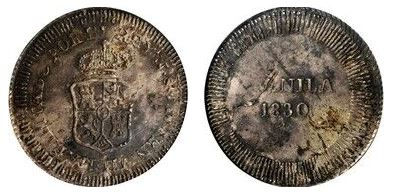
Stamping and Circulation Notes:
The Manila counterstamping process was delicate, and original inscriptions may still remain partially visible. For later validation use through 1839, worn or altered coins could still be accepted if they met weight and quality standards.
F.7.o Countermark
Small circular mark with a crown bearing the initials of the ruling monarch.
Represents King Fernando VII.
Introduced in 1832 and used until his death in 1834.


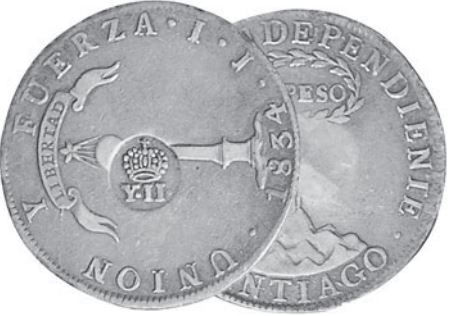
Y.II Countermark
Represents Queen Isabella II.
Introduced in 1834 following her accession to the throne.

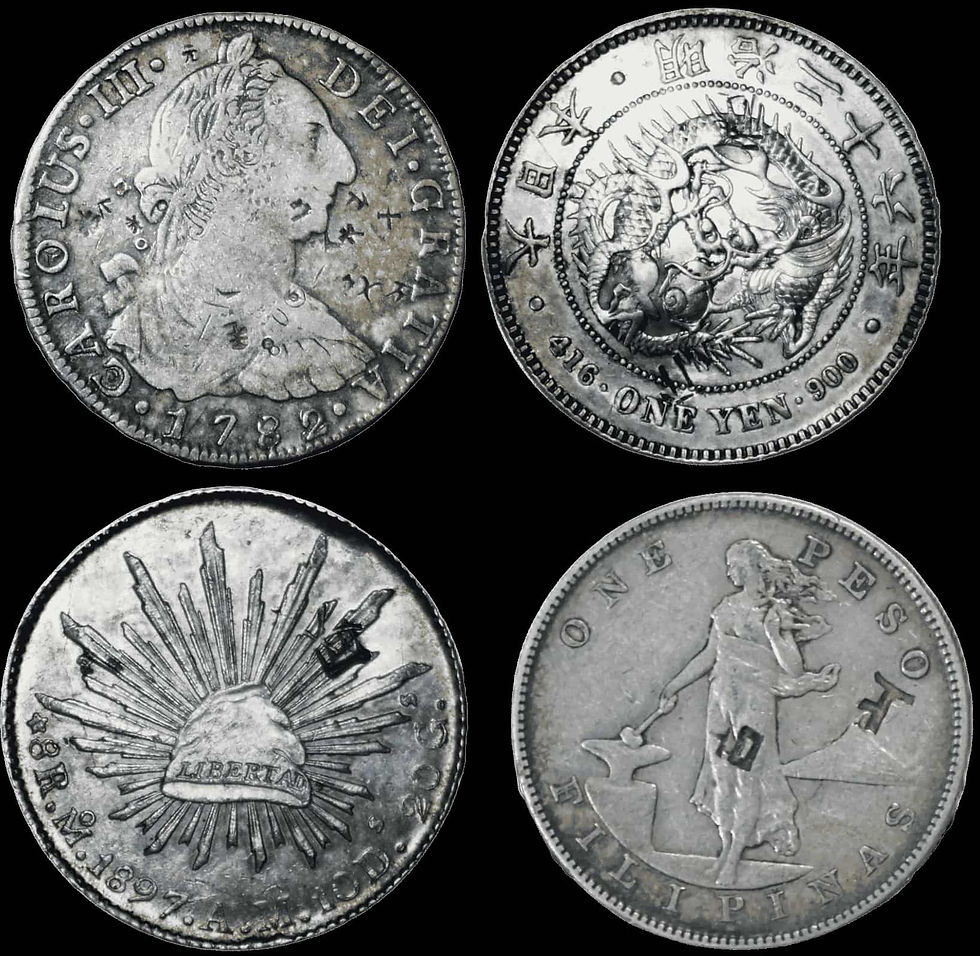
Host Coins: The Foundation of Counterstamped Collecting
One of the most interesting aspects of collecting counterstamped coins is studying the host coins themselves. Because the Philippines relied heavily on foreign coinage, official counterstamps were often applied to Spanish-American pieces and other large silver trade coins.
Latin American 8 reales from various mints
Other large silver coins circulating in Asian trade
For collectors, the host coin can be just as interesting as the mark. Differences in mint origin, date, and design create additional layers of variety.
Collectible Features
Counterstamped coins are described as highly prized collectibles.
Surviving examples are relatively scarce.
Variations in counterstamp placement, size, and clarity can affect collector value.
Circular countermarks are noted to show design or die variations, especially in crown patterns.
Study Note:
These coins are collectible, but certain types—particularly the Manila counterstamp—can be extremely rare. Many countermark examples still appear in auctions and collector markets, though condition and host coin variety can significantly affect desirability.
What Collectors Look For
When studying Philippine counterstamped coins, collectors typically examine several factors.
The Counterstamp
Collectors evaluate:
Clarity of the stamp
Placement on the coin
Completeness of the design
Design variations of the countermark
The Host Coin
Because these stamps appear on foreign coins, collectors also consider:
The original coin’s mint
The date of the host coin
Overall condition
Some collectors specialize in studying specific host coin varieties.
Condition
Condition plays an important role in value and desirability. However, collectors often accept some wear because these coins circulated heavily in everyday commerce.
Even worn examples can remain historically important and collectible.
Collector Note: Counterstamping could also serve as a form of revalidation, allowing worn, holed, or damaged coins to remain in circulation, provided they still met the accepted monetary standards of the period.
Chopmarks in Collecting
Chopmarks are different from official counterstamps.
They were typically applied by:
Merchants
Money changers
Traders
Chopmarks indicated that a coin had been tested and accepted for its silver content.
Chopmarked coins interest collectors because they document historical trade practices, provide evidence of regional monetary circulation, and make each coin unique due to its additional markings.
Although these marks technically alter the coin, they often increase the historical significance of the piece.
Authentication Notes
Counterstamped coins are susceptible to counterfeiting.
Some fakes can be identified by poor craftsmanship, while others are well made enough to deceive even experienced collectors and graders.
Check whether the coin date and counterstamp date align with the periods noted in the series.
Coins with counterstamp dates above 1837 are described as dubious, except for certain cases involving chopmarked coins that still require careful validation.
Examine crown design variations carefully and compare them with known legitimate specimens.
Research and comparison with authenticated examples are essential.
Because countermarks alter the original coin, collectors should be cautious when evaluating marked coins. One common mistake is confusing legitimate countermarks with damage or later alterations. Not all marks add value—some may reduce it depending on how and when they were applied.
Learn how to evaluate these differences → Problem Coins in Philippine Numismatics
Important considerations include:
Determining whether the mark is historical or recently added
Studying the style and placement of known countermarks
Comparing examples with verified auction records or reference collections
In some cases, professional grading services may attribute known countermarks.
Studying verified examples and consulting reliable references can help collectors avoid misidentified pieces.
References & Sources:
Yap, Eldrich, and Janssen Bantugan. "Resellos Filipinos: Countermarked Coins of the Philippines." Quezon City, Philippines: Sact Sure Print Unlimited, 2018.
Philippine Numismatic and Antiquarian Society, Philippine Numismatics Monographs No. 16: "Counterstamped Coins of the Philippines" Manila, Philippines, August 1966.
Continue Your Philippine Numismatics Journey


Comments